
Many of you know I’m from Baltimore and started playing guitar when I was thirteen. Symington Avenue in Paradise, the neighborhood where I grew up, is about four miles east of Ellicott City which is on the western side of the Patapsco River. Just on the eastern side of the river is a community called Oella, a historic mill town. The Union Manufacturing Company built a textile mill there in 1808. Oella got its name from William Dickey who bought the Union Manufacturing Company mill in 1887 renaming the mill “Oella” after the first woman to spin cotton in America. The textile mill operated until 1972, the same year that Hurricane Agnes flooded the river and I graduated from high school.
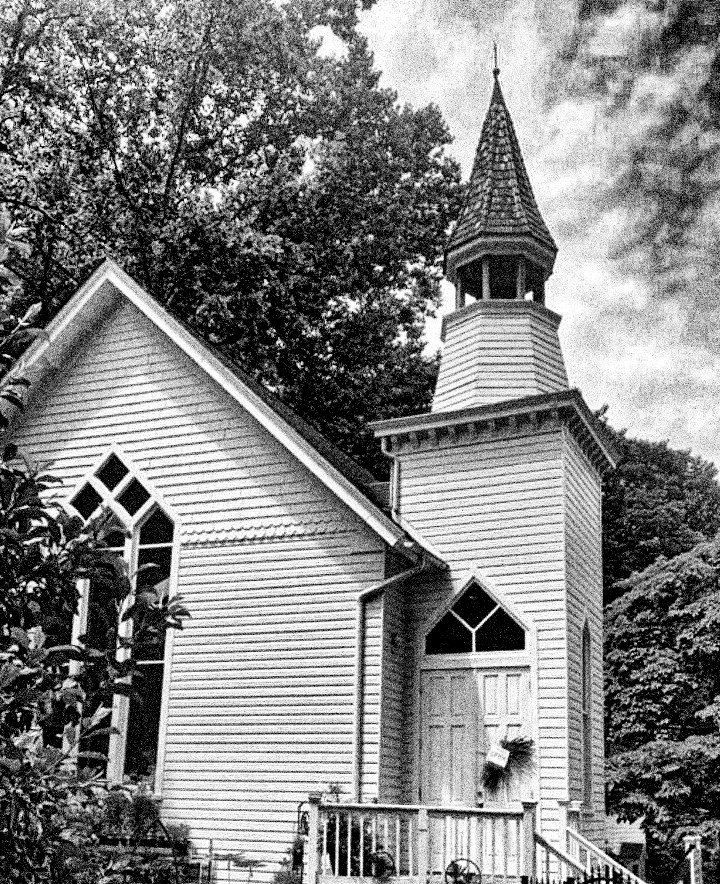
During my high school years, 1970 to 1972, I had friends who lived in Oella. Their parents had come from Appalachia to Baltimore for work. Some worked in the mills along the river. There was a small clap board church at the bottom of Hollow Road just on Oella Avenue where I would sit on the front steps and play my guitar into the night. That building is now a garden shop. I guess churches like gas stations believe in reincarnation and sometimes come back with a repurpose. Those steps may have been where I first heard the songs of John Prine. Aiming to please my listening audience on the church steps, I learned some of those Prine songs. One song we all liked was “Sam Stone.”
Prine’s song came out in 1971 during the Vietnam War. The original title was “Great American Conflict Veteran’s Blues.” There’s a line in the chorus, “little pitchers have big ears,” an idiom older than Dickens. I recently was telling a friend about a music festival I went to in March over in Knoxville, Big Ears. She asked me where the name of the festival came from, and I said I didn’t know. She said maybe it came from that John Prine song, “Sam Stone.” In 2010 Rolling Stone magazine exalted Big Ears as “arguably the classiest, most diverse festival in the country.”

I went with my friend and collaborator Geoffrey Himes. Geoff is a writer/song maker/journalist who was covering the gathering for Paste Magazine. Geoff’s article is about this year’s festival and the 60th birthday for Nonesuch Records. Both the festival and the record label share a passion to celebrate diversity.
The pull of innovation can unroot the grounding of tradition in music. But isn’t that supposed to happen? In order to innovate doesn’t one have to know tradition? I’ve heard it said that a good place to be is in the present with one foot slightly in the past and one slightly in the future. Can’t that be said about music as well? A composer/songwriter who has a foot slightly in tradition while the other is slightly in innovation but squarely in the present would seem in a good place. At Big Ears, an attendee has the opportunity to witness and join in on the dance, a dance that steps from tradition to innovation and everything in between.
One of my favorite jazz performances was by Christian McBride and Brad Mehldau. They performed in the Tennessee Theater. Most of their performance seemed to be pushing boundaries and sometimes exceeding them. To see and hear two musicians joyfully creating new music never heard before, even by themselves, is what makes live jazz music so exciting. You can be transported, beamed up and delivered to the unknown by a performance like McBride and Mehldau gave at Big Ears.

Another jazz performance that was stimulating was by the Dave Holland New Quartet. Again, the quartet pushed boundaries and made new music while having a charged conversation with each other. They were listening to each other as much as playing. Dave Holland is a bass player who rose to prominence with Miles Davis, Stan Getz and others.

One of my favorite discoveries was a duo called Ringdown, at the Old City Performance Arts Center, a smaller, warehouse style open floor plan. Caroline Shaw and Danni Leigh performed behind two tables with laptops, keyboards and mixers. Caroline played violin as well. I was most impressed with their duet vocals, both excellent singers. A pleasing blend of electronica and analog. Their harmonies were Everlyish but new somehow. They did a cover of Willie Nelson’s “Crazy” that featured the melody with experimental, other worldly fills that reinforced the title. I hope Willie has heard their reading.
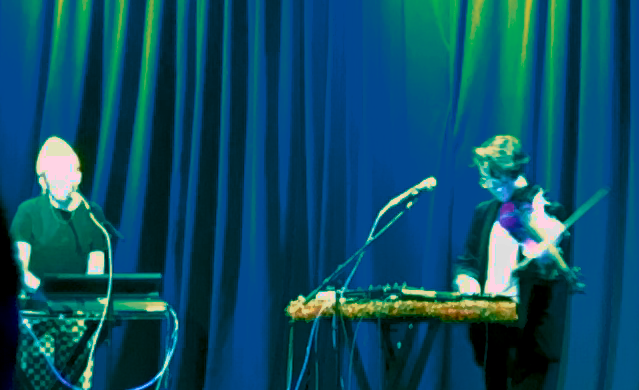
It was a hoot to see Kronos Quartet in the Knoxville Civic Auditorium. This was a special performance as they are celebrating their 50th anniversary calling their concert Five Decades. They had two special guests, Brian Carpenter and Tanya Tagaq. I enjoyed their diversity of repertoire. One of my favs was their reading of “God Shall Wipe Away All Tears.” I also enjoyed their arrangement of the Jimi Hendrix song, “Purple Haze.”

There were other media events besides music performance. On Saturday morning I made it to a world premier screening of “ANCIENT VOICES: A Film for George Crumb” at the Regal Riviera Cinema. The film was done by the Chamber Music Society of Lincoln Center. Tristan Cook, the director, did a Q & A after the screening which was fun. The film featured interviews and rehearsal performances with many of the chamber musicians who performed Crumb’s work. I had forgotten that Crumb had a piece of music included in the film soundtrack for The Exorcist back in 1973. In fact at that Q & A, we learned that Crumb was asked to score the entire film but declined because he “didn’t like to work with time constraints,” not meaning deadlines but rather the parameters that film scoring requires.
Another other media event I went to was called “Reconstructing the Soundtrack” with Blake Leyh. Blake wrote the theme, “The Fall,” for David Simon’s The Wire. Blake also is a sound designer. He spoke about how the sound in film comes from four different places- (1) Sync Sound– the sound recorded with the camera, (2) Post Sound– to illustrate the image, (3) Fantastical sounds, and (4) Sound Design– to provoke the emotion. He spoke about how sound in film has fallen into two camps, the Star Wars camp and the Apocalypse Now camp, with the latter bringing more conceptual ideas to the film. He showed clips from Snake In The Eagle’s Shadow, Neptune Frost, Titus and The Abyss, pointing out how the musical score was supporting the moving images. He juxtaposed the same clip with the score and then without. He also did the same with the temp music and then the final score. The temp music is a temporary score, sometimes music from another film, that serves as a point of departure for the conversation that happens between director and composer.” A temp score may serve as a guide to what the filmmakers hope to achieve in terms of tone, tempo, and intensity for the final score.” footnote One final clip to mention was Forbidden Planet which is credited with being the first film with an entire electronic score. In the original credits, the composers, Bebe and Louis Barron, were credited as Electronic Music. The musicians union argued that music should not be included as a credit, the Barrons were not in the union, and so the film credit read electronic tonalities composed by Bebe and Louis Barron. Here is a clip from the score.

Don’t you love that poster? The robot reminds me of the robot on Lost In Space. I’m hoping I can talk Sue into watching this film. I did go listen to some of the electronic tonalities, and they were spot on. They reminded me of Joe Meek.
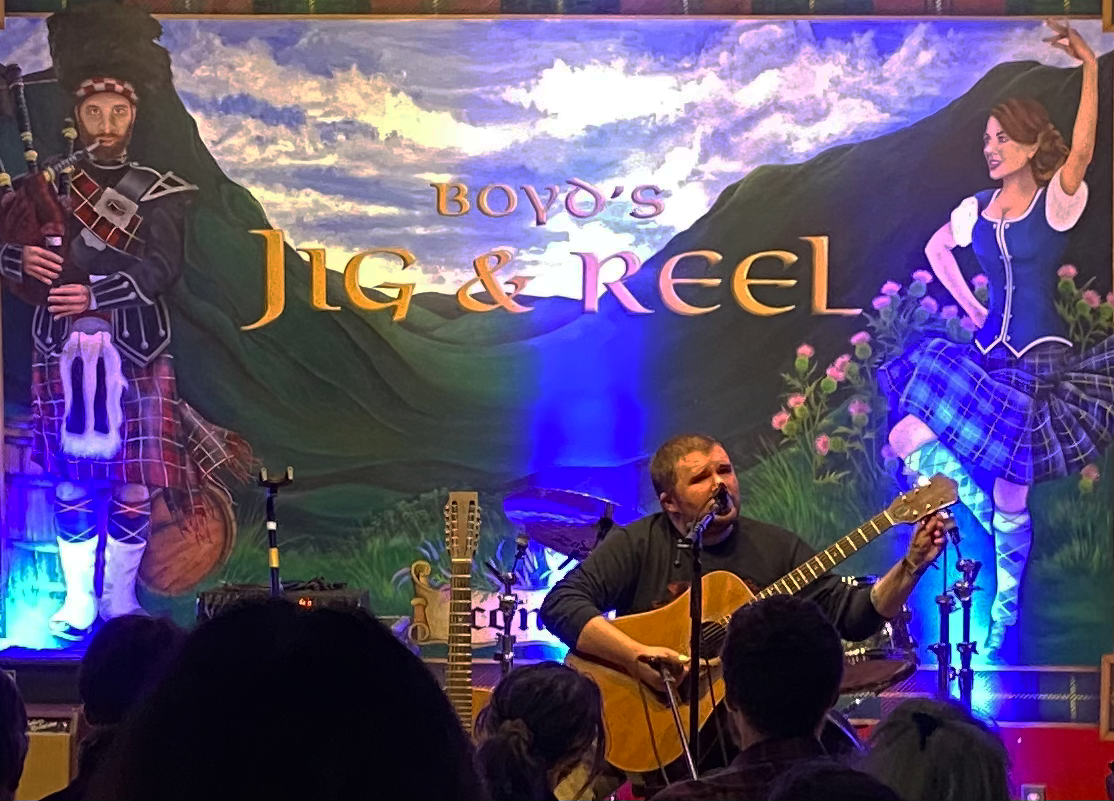
One final artist I’d like to mention is Joseph Allred, an American primitive guitarist from Fentress County, the upper Cumberland region of Tennessee, about an hour from Liberty. Their’s was a discovery for me. I had not heard of them. The venue they performed in was one of the smaller ones, which I enjoyed. It was a standing only audience, Joseph sat while performing so I couldn’t see them very well, but they played some selections on the twelve string guitar which was welcoming. Their music was Appalachian, eastern, middle eastern, drony and open tuned, much was tonal with driving tempos.
Here is a link to a longer detailed review from WUTC, a Chattanooga NPR station on Big Ears 2024. Here is a link to next year’s line-up on March 27-30.
Big Ears has been in my vocabulary for decades, long before the first Big Ears festival in 2009. When I was teaching guitar in the 1990s I had a few younger students, about the age when I first started. I borrowed the idea of using mnemonics that helps neophyte musicians remember the lines and spaces of the musical staff, Every Good Boy Does Fine, for the strings of the guitar, Elephants And Donkeys Grow Big Ears.
Our dog, Mavis, has big ears, but her nose is her greatest sense.
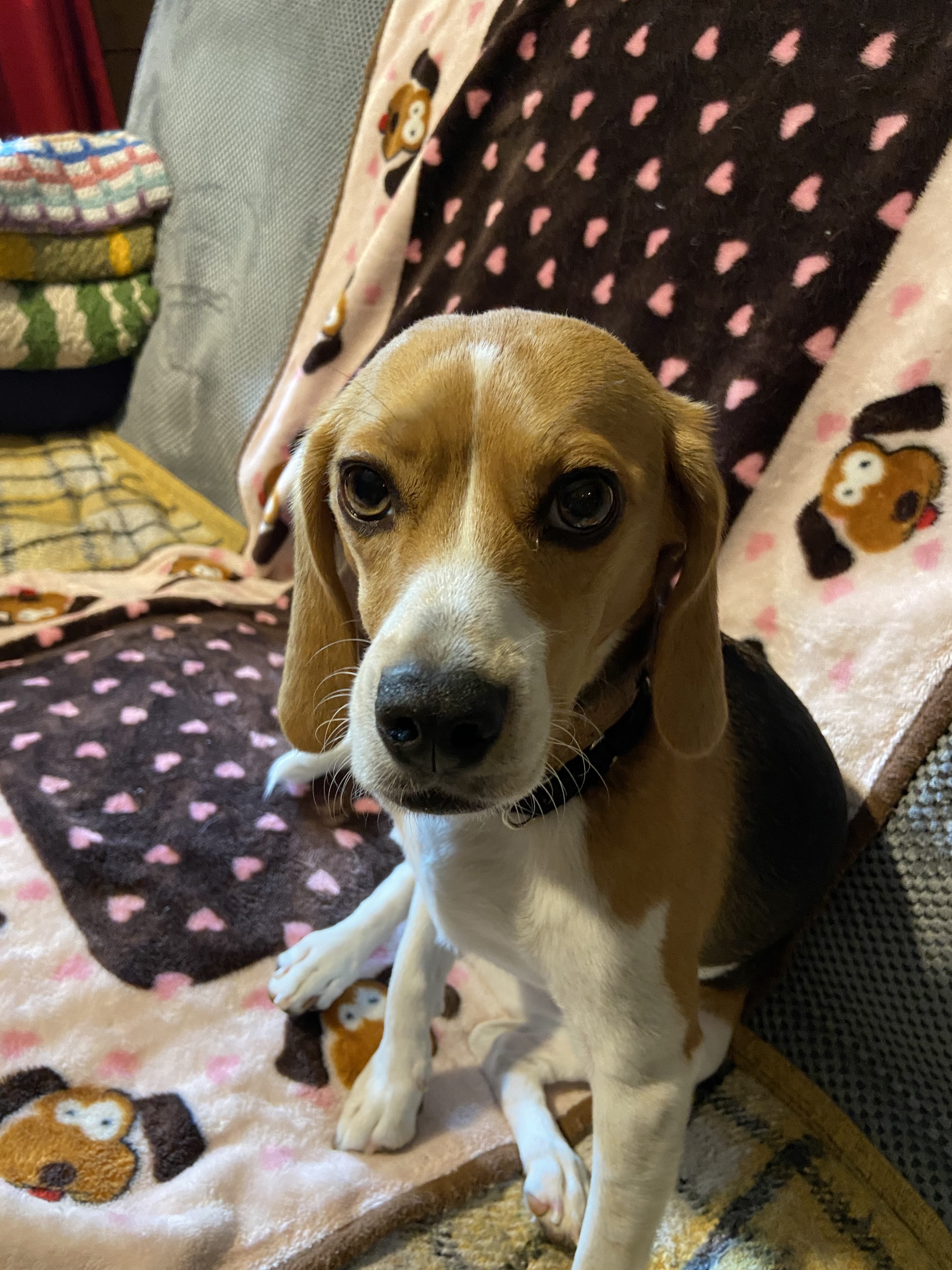
I did learn that our ears grow as we age, as much as a half an inch over a fifty year period, gravity no doubt. It’s too bad that their abilities don’t increase as well.
I’ll close this post with a pitch. If you are interested in studying the guitar, please get in touch, and we can talk about how to make that happen. Perhaps you’d like to give a lesson as a gift for a friend? Here is a link to my store. And remember, you don’t have to have big ears to have fun with a guitar…
Hope to see you at Big Ears next year…
Billy


 Billy Kemp
Leave a reply to Billy Kemp Cancel reply